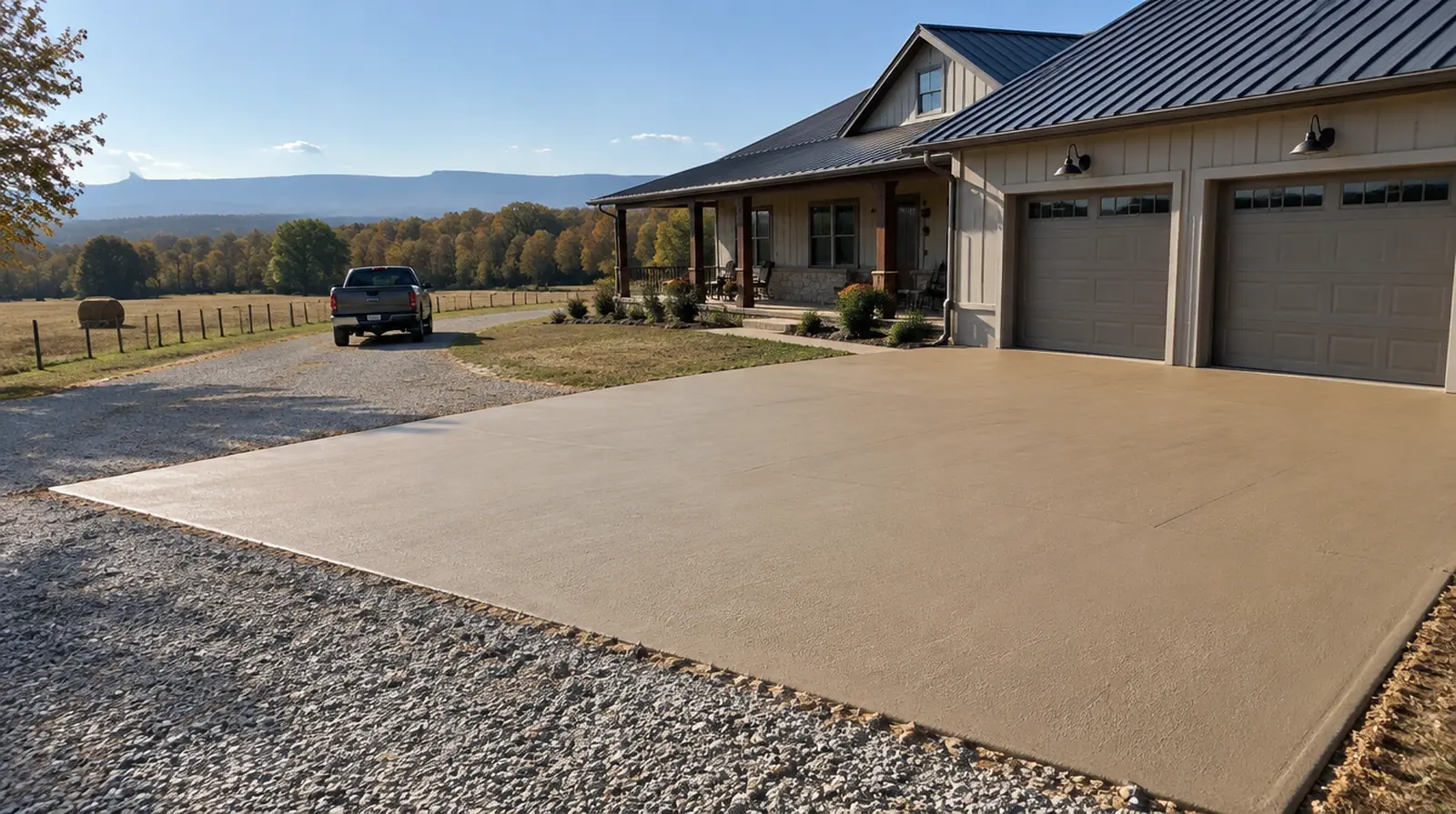
What gets coated on a rural property
Many homes around Booneville have long gravel or chip-and-seal drives, with concrete only near the house. That concrete takes most of the wear. Trucks turn on it, mud and red clay get tracked onto it, and it collects drips from equipment and vehicles. We coat the parts that need it most:
- The garage apron and parking pad in front of the house.
- The shop or barn pad where tractors, mowers and side-by-sides are parked and serviced.
- Full concrete driveways on lots in town.
- Walkways and porches that tie the driveway to the house.
Gravel and dirt drives cannot be coated. Our systems need sound concrete to bond to.
Why bare concrete wears out here
The Arkansas River Valley gets hot, humid summers, heavy spring rains and a few hard freezes every winter, sometimes with ice. Water soaks into unsealed concrete and breaks down the surface over time, especially where it puddles. Diesel and hydraulic fluid from farm equipment stain deeply. Mud tracked in from fields and pastures grinds into the surface like sandpaper. A coated surface keeps water and fluids out and lets you hose off mud instead of scrubbing it.
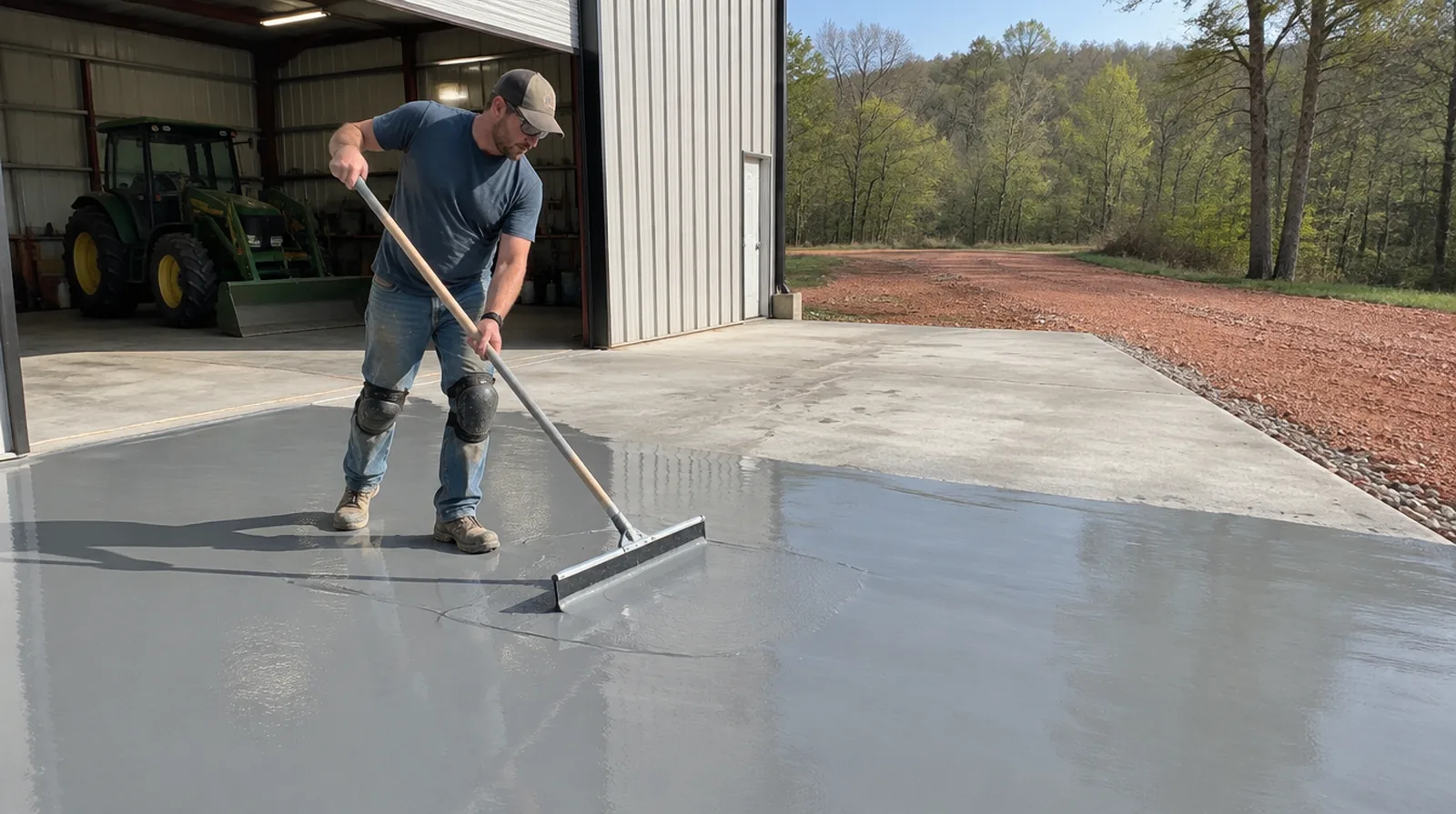
Materials meant for outdoors
Standard garage epoxy is made for indoors. Out in the sun it yellows and chalks, so we do not use it on driveways or pads. We use UV-stable polyaspartic or polyurea coatings, which keep their color outside and cure fast enough to fit around your schedule. Every outdoor job gets aggregate in the top coat for traction, since a smooth coating is slick when wet. On pads where heavy equipment turns, we build up a thicker system.
For colors, earth tones like tan, brown and gray hide red dirt and dust between washes. Flake blends are another good option.
What we check before we start
A coating is only as good as the slab under it. On older country properties, concrete is sometimes thin, poured without much base, or cracked from heavy loads. We look for sunken or broken sections, wide cracks and spots where water stands. Some cracks can be filled and coated over. Broken or heaving sections need repair first. If the concrete is too far gone, we will tell you so before you spend money on a coating.
How the job goes
We clear the surface, scrape off caked mud, and degrease fuel and oil spots. The concrete is then ground with diamond tooling to open it up and remove weak material. Cracks and chips are filled. After that come the primer, color coat and textured top coat. Small aprons and pads may take a day. Larger shop pads and full driveways usually take two. You can walk on it within hours, but keep vehicles and equipment off for at least a day, longer in cool weather.
Keeping it in good shape
Hose off mud and dust as needed. Wipe up fuel and hydraulic fluid. Avoid dragging implements, chains or equipment with bare steel edges across the surface. In winter, sand works well for traction. If you use ice melt, pick one that is safe for concrete. A fresh top coat can be added later where traffic is heaviest.
Questions
Can you match the inside of the shop or garage?
Yes. Inside, we install garage floor epoxy or heavy-duty epoxy flooring for shops.
How far do you travel?
We serve Booneville and the surrounding area, including Magazine, Paris, Waldron, Greenwood and Mansfield.
Let's talk about your driveway
Call (479) 777-0943. We will come out, measure the concrete and give you a written price.