Below-grade spaces in Booneville
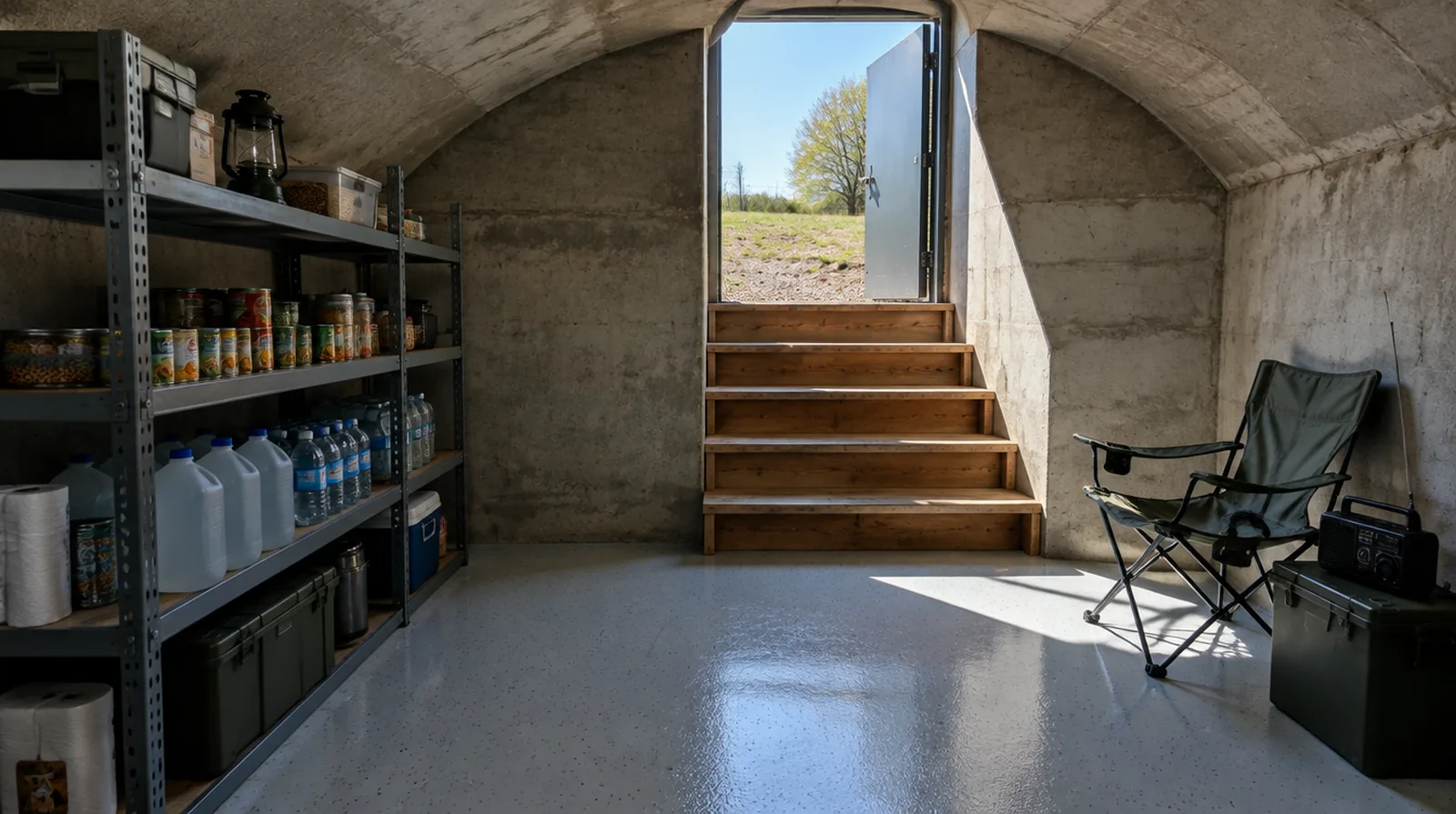
Booneville sits in the Petit Jean River valley with Mount Magazine to the north and the Ouachita foothills to the south. On flat lots in town, builders have almost always used slabs or crawl spaces. Basements show up mostly where the ground slopes, so a lower level can open to daylight on one side, and in older farmhouses where a cellar was dug for storage. The concrete space we coat most often is a storm cellar. Spring storms here are serious, and many families keep a cellar or safe room stocked and ready.
All of these spaces share one thing: they sit in contact with damp ground. That changes how a floor coating has to be chosen and installed.
Why moisture comes first
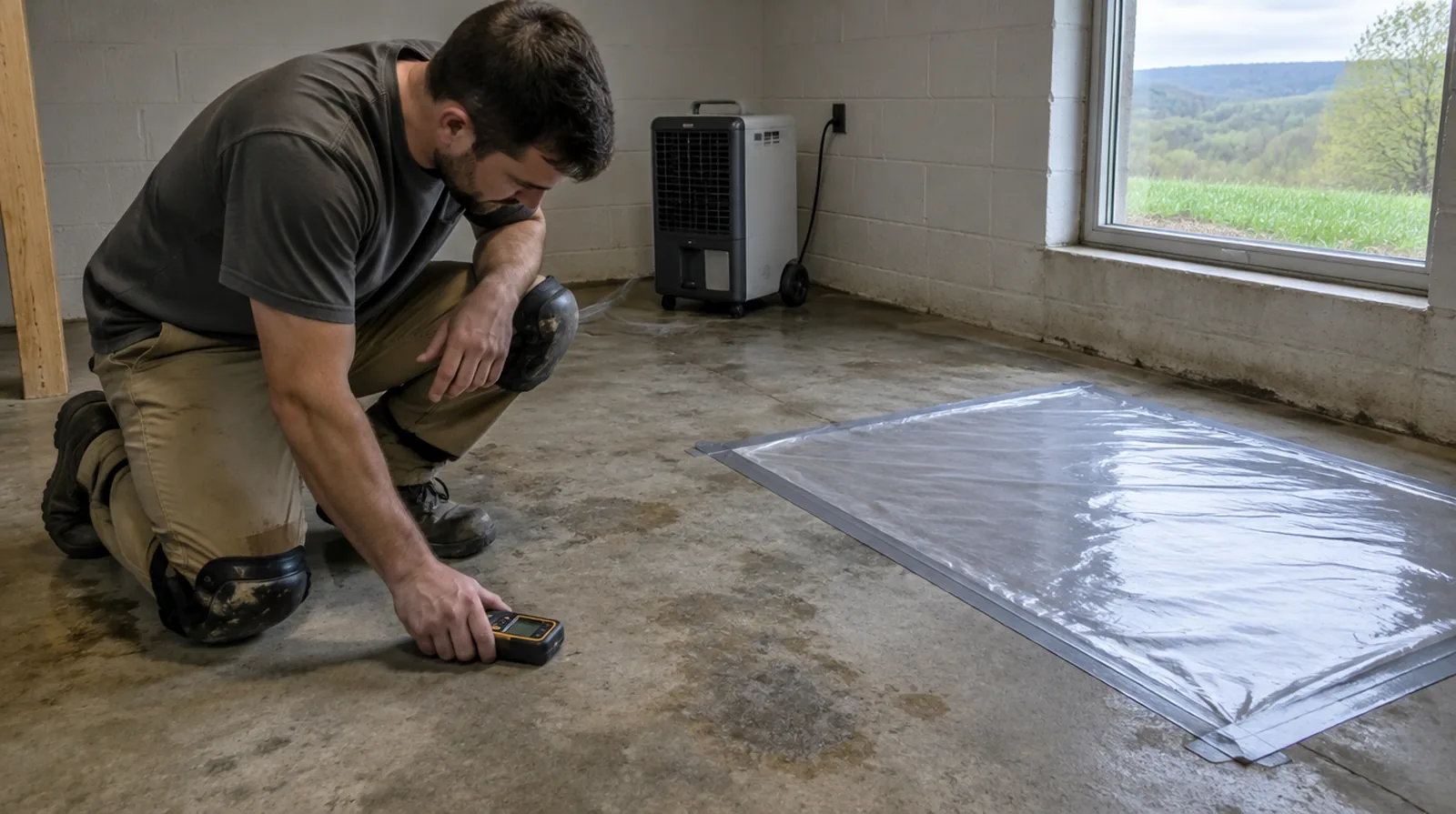
Concrete below grade pulls water vapor up from the soil. During wet springs and humid summers, that vapor can push against the bottom of a coating until it blisters or peels. Many failed basement floors were coated with a single thin layer of epoxy paint over a slab that was never tested.
Before we quote, we check the concrete with a meter and, when needed, a longer test under plastic sheeting. We also look at the walls, the floor drain, any sump and the grading outside. If water is running into the space, that has to be fixed with gutters, grading or drainage work before any floor coating will last.
The coating system we use
Grinding. We diamond grind the slab to remove old paint, sealers and the weak surface layer, which opens the pores for a strong bond.
Moisture-tolerant primer. Where testing shows vapor, we use a primer made to block moisture before the main coat goes on.
Base and color. A solid color epoxy, often with a broadcast of flakes like our epoxy flake flooring, adds texture and hides scuffs.
Topcoat. A clear, durable topcoat makes the floor easy to mop and resistant to the spills and dragged boxes a cellar sees.
In a small storm cellar, a light color makes a big difference. It bounces lantern and flashlight light around a space that is usually dim, and it makes it easier to see dirt and pests.
Uses beyond storm shelter
Lower levels on hillside lots often become shops, game rooms or extra storage. A coated floor is easy to sweep, holds up to rolling tool chests and does not grow mildew the way carpet can. For a polished look in a finished lower level, ask about metallic epoxy flooring or polished concrete, depending on the moisture readings.
Keeping the space dry
A coating protects the concrete surface, but it does not replace good drainage. Keep gutters clean, make sure the ground slopes away from the walls and run a dehumidifier in humid months. If your coated floor ever gets scratched or chipped, epoxy floor repair can fix the spot without redoing the whole room.
Choosing a color for a dim space
Cellars and lower levels usually have little natural light, so floor color matters more than it does in a garage. Light grays and tans with small flecks brighten the room and still hide dust and footprints. Solid white shows every mark, and dark colors make a small room feel smaller. For steps into a cellar we add extra grit to the coating and can paint a contrasting edge on each tread so they are easy to see with a flashlight. If you store food, water and supplies, a smooth topcoat makes it easy to wipe up spills and keep the floor clean.
Common questions
Can a damp cellar floor be coated? Often, yes, if the dampness is vapor and not running water. Testing tells us which system will work.
How long does a cellar floor take? Most small cellars are done in one to two days, with light use the day after.
Do you work outside town? Yes, including Magazine, Paris, Waldron and the rural areas of south Logan County.
Start with a moisture test
Call (479) 777-0943. We will look at the space, test the concrete for moisture and tell you honestly what kind of coating will hold up.