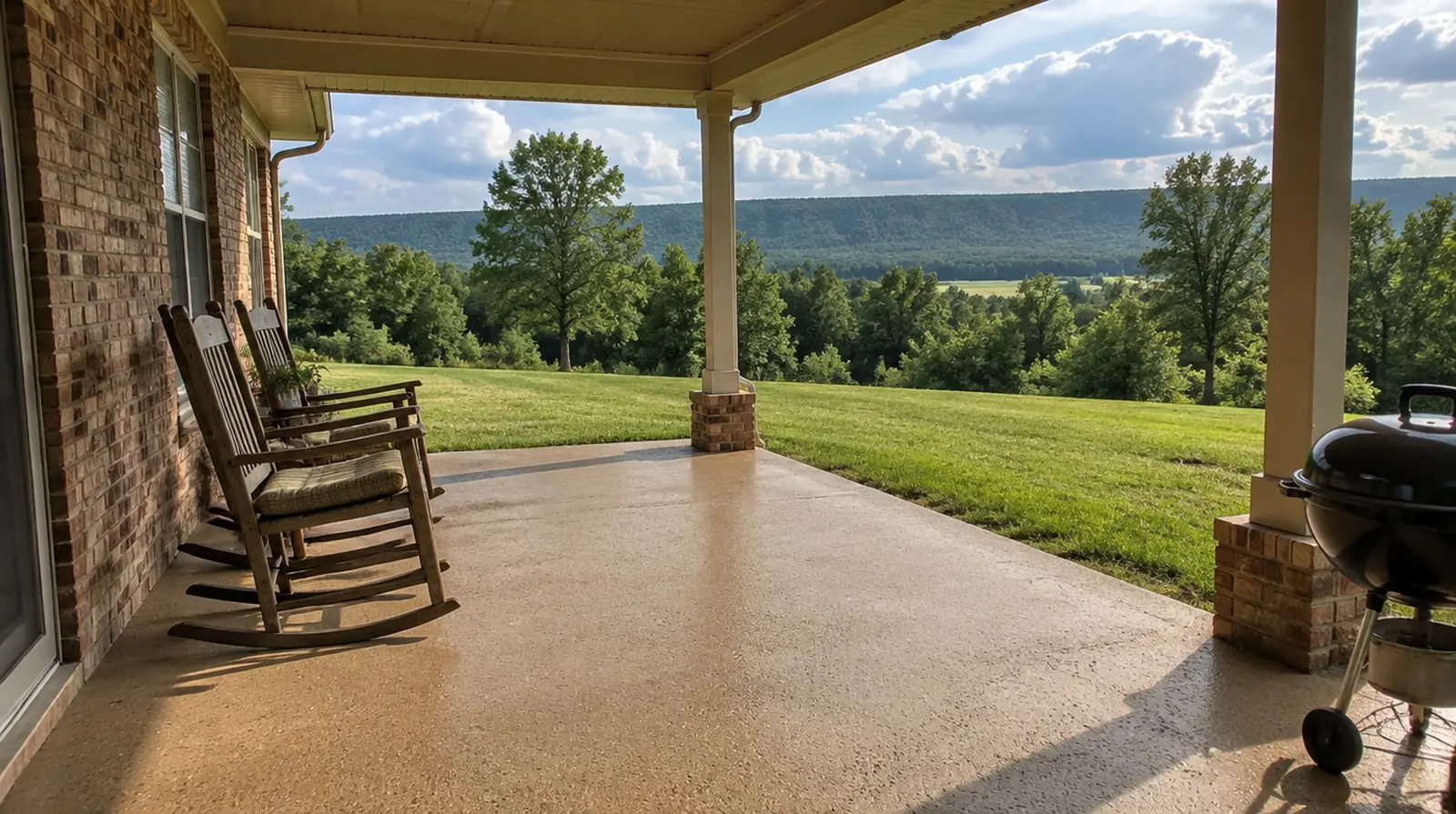
What river-valley weather does to a patio
Booneville sits in the Petit Jean River valley of Logan County, with Mount Magazine rising to the northeast. Summers here are long and sticky, and spring brings heavy rain and the occasional hailstorm. Winters are mild most days but still bring hard freezes and the odd sheet of ice. A bare concrete patio soaks up all of it.
Humidity keeps shaded slabs damp, so mildew and green algae creep in from the edges. Water that sits in low spots freezes in January and pops small flakes off the surface. Red clay washes onto the slab from flower beds and leaves orange stains that never seem to scrub out. After twenty or thirty years, most patios look tired even if the concrete is still solid underneath.
What a patio coating is
A patio coating is a thin, bonded system applied over sound concrete. It is not paint and it is not a new pour. We grind or profile the slab, repair the damage, then build up a base coat, decorative flakes or a texture, and a clear, UV-stable topcoat. The finished surface is sealed against water and stains and has enough grip for wet bare feet.
Outdoors we use polyaspartic or polyurea topcoats rather than standard indoor epoxy. Plain epoxy turns yellow and chalky in direct sun. The products we use outside are made to keep their color on a south-facing slab.
How we coat a Booneville patio
- Look at drainage. If water pools against the house or runs onto the porch, we point that out first. A coating will not fix a slab that tilts the wrong way.
- Clean and profile. We pressure wash away mildew and dirt, then grind the surface so the coating can bite into it.
- Fix cracks and spalls. Settlement cracks and freeze damage get filled with a flexible repair material.
- Base and texture. A pigmented base coat goes down, followed by a flake broadcast or a light texture.
- Topcoat. A clear UV-stable coat locks it in and can include a fine grit for extra traction.
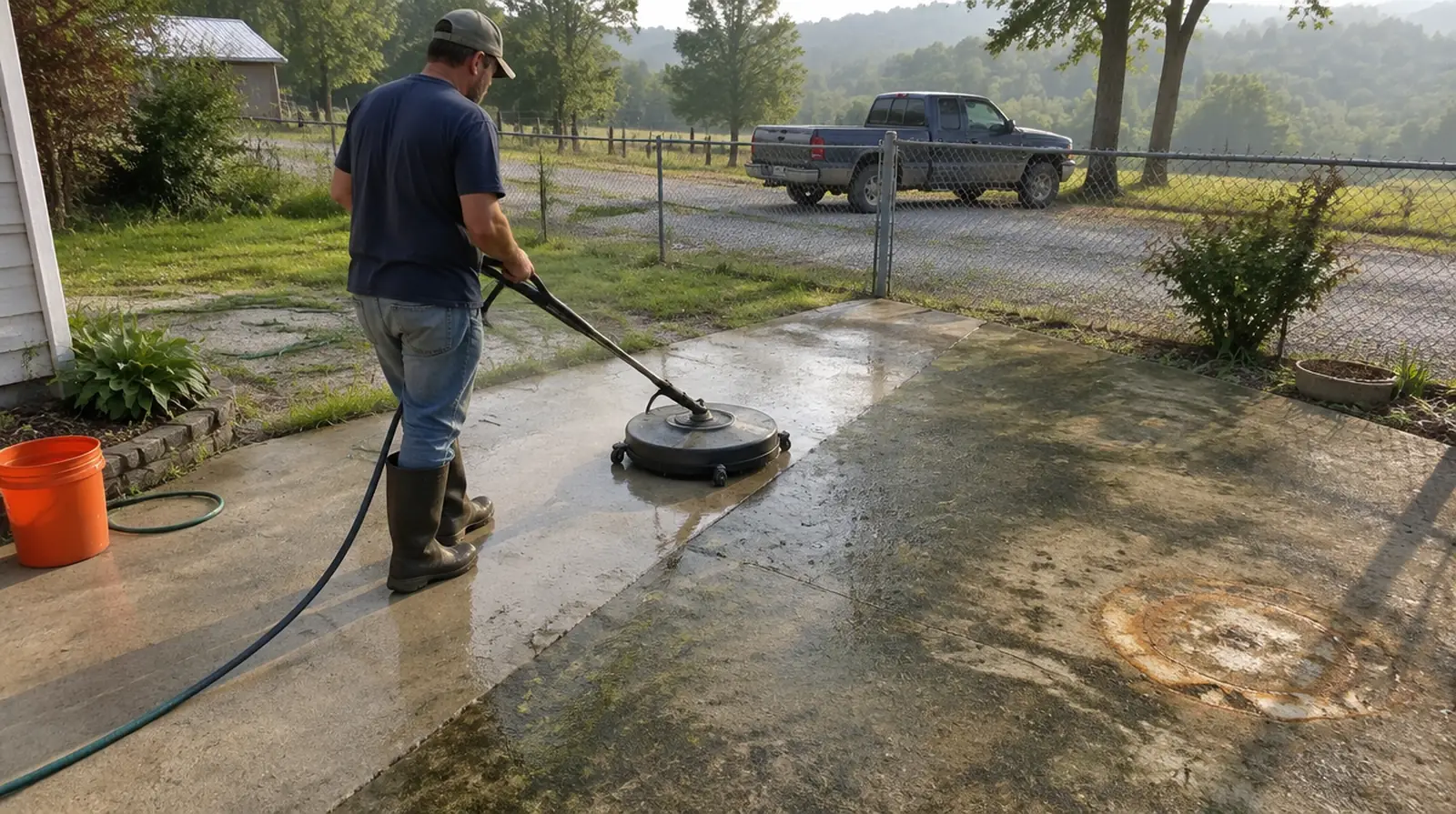
Covered porches, open slabs and carports
Covered back porches stay damp longest, so we take extra time with cleaning and moisture checks before coating.
Open slabs get full sun and rain. Lighter colors stay cooler underfoot in July and hide dust and pollen better.
Carports and breezeways on older homes often double as patios. These see oil drips, mud and tires, so we use a tougher flake system similar to our garage floor epoxy.
If you only want to protect plain concrete without changing its look, a clear concrete sealer may be the better fit. We will tell you which one makes sense.
Choosing colors for the country
Around Booneville, earthy tans, grays and browns tend to blend best with brick ranch homes, metal roofs and wooded yards. A blended flake hides tracked-in red dirt, leaves and pollen far better than a solid color. If you have a pool, our pool deck coating uses a cooler, extra-grippy texture made for wet feet.
When to schedule
We coat when the slab is dry and the weather cooperates. Late spring and early fall are usually best. In the dead of summer we start early in the morning so the coating does not cure too fast in the heat. Most patios are walkable the next day, with furniture back on after about 24 to 48 hours.
Keeping it looking good
Sweep off leaves and pine needles, rinse with a hose and use a mild soap for grill spots. Put felt or plastic feet on metal furniture, and do not use a pressure washer at close range. Every few years, a fresh clear topcoat restores the shine on a slab that gets heavy sun.
Common questions
Can you coat a cracked patio? Yes, if the slab is stable. Moving cracks may show through again, and we will tell you up front.
Will it be slippery after rain? Not with the texture and grit we use outdoors.
Do you work outside town? Yes, including rural homes around Magazine, Blue Mountain and the rest of southern Logan County.
Get a patio coating price
Call (479) 777-0943. We will look at the slab, check how water drains off it and give you a written price.